
Light commercial, farms and government facilities on well water — Maryland, WV, VA & PA
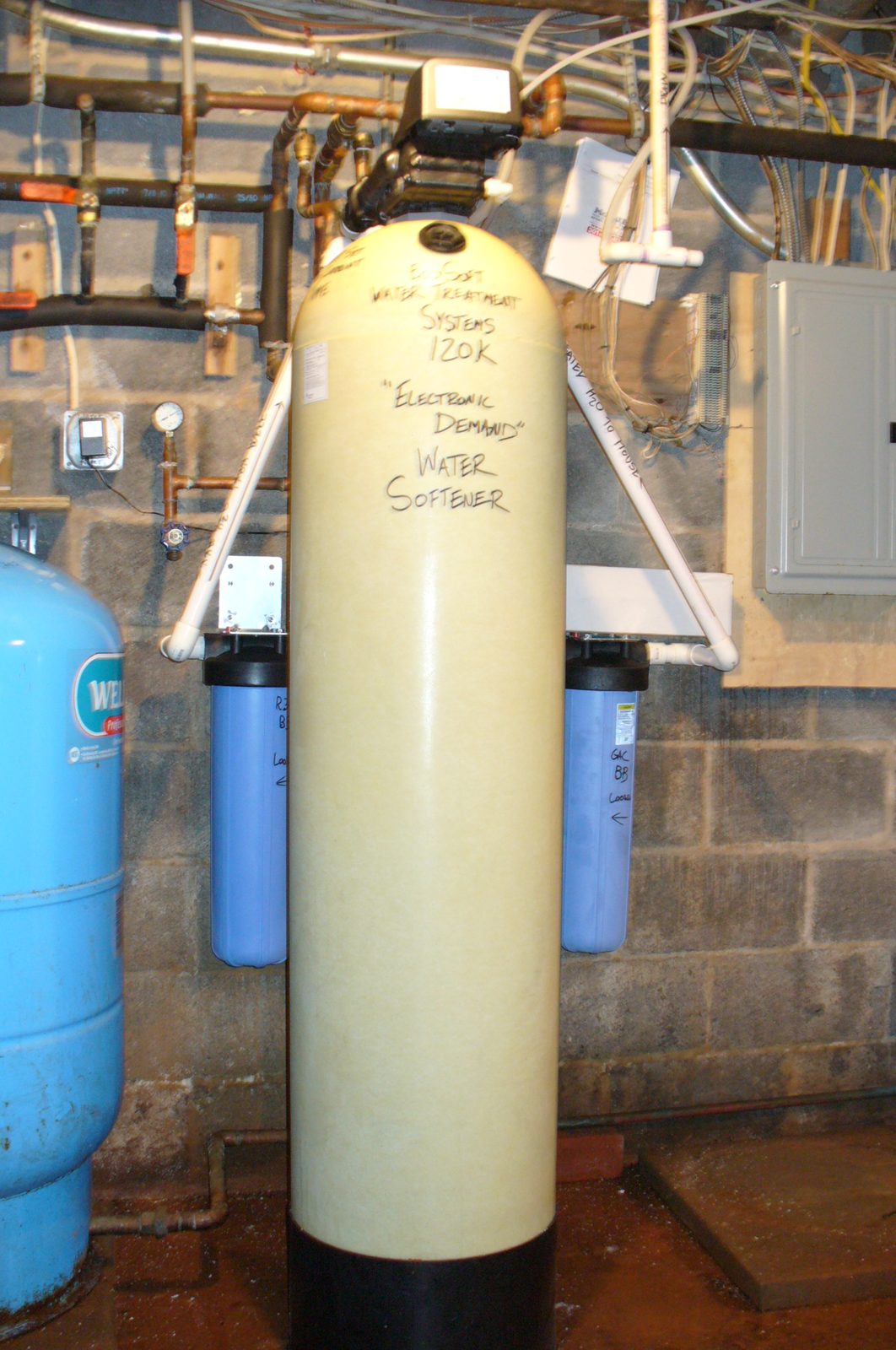
I do light commercial water treatment: restaurants, farms, small businesses and public buildings on wells. When the system fails, you don't get a call center and a week's wait. You get me, Scott Handy. I've serviced water treatment equipment across Maryland, the Eastern West Virginia Panhandle, Northern Virginia and South Central Pennsylvania for 38 years, and I build commercial-grade systems myself.
This page covers commercial water softener service and repair, new commercial water treatment systems, and ongoing maintenance for businesses and public facilities in Maryland, West Virginia, Virginia and Pennsylvania. Most of this work is on well water. I also treat city water, where chlorine and hardness are the usual problems.
Call (301) 416-8331, or send photos of the equipment through the contact form. Most problems I can diagnose from a few pictures and a description before I come out.
A business has the same water problems a home does: hard water scaling up equipment, iron staining and sulfur odor. The stakes are higher: failed water heaters, spotted glassware, health inspections, and customers who notice. I design and service water treatment for restaurants, car washes, salons, laundromats, medical and dental offices, churches, schools, daycares, breweries, offices and apartment buildings.
Mr. Water LLC is licensed, insured and bonded.
"Scott is a true professional when it comes to customer service and his expertise in water systems. I had Mr. Water install a system for the US National Park Service at the Monocacy National Battlefield."
Philip Grewe, Google review, April 3, 2018 · Read more reviews
Hard water leaves scale in water heaters, dish machines, boilers and laundry equipment, and it spots glassware. A cation exchange water softener, sized to the building's hardness and water use, is the fix.
Iron leaves orange stains on fixtures and laundry, and it fouls softener resin and control valves. Depending on the water test, I treat it with a heavy duty softener, an iron filter, or my patented closed pressure aeration system.
Hydrogen sulfide makes water smell like rotten eggs, and customers and staff notice it right away. I remove it with air injection or with my patented system, which keeps an air pocket in the softener tank to oxidize iron and sulfur. One tank then removes hardness, iron and odor together, with no chlorine feed pump and no separate iron filter tank to maintain.
Low-pH well water damages pipes, fixtures and water heaters. An acid neutralizer corrects the pH before the damage is done.
A failed bacteria test can shut down a restaurant or bar on well water. UV disinfection treats bacteria without chemicals, as long as the water is pre-treated first.
Sand, silt and rust act like sandpaper on the pistons, seals and o-rings inside control valves, and they clog screens and fixtures. Sediment filtration ahead of the other equipment protects everything downstream.
Chlorinated city water can destroy the resin inside a water softener in less than five years. A carbon pre-filter ahead of the softener prevents it.
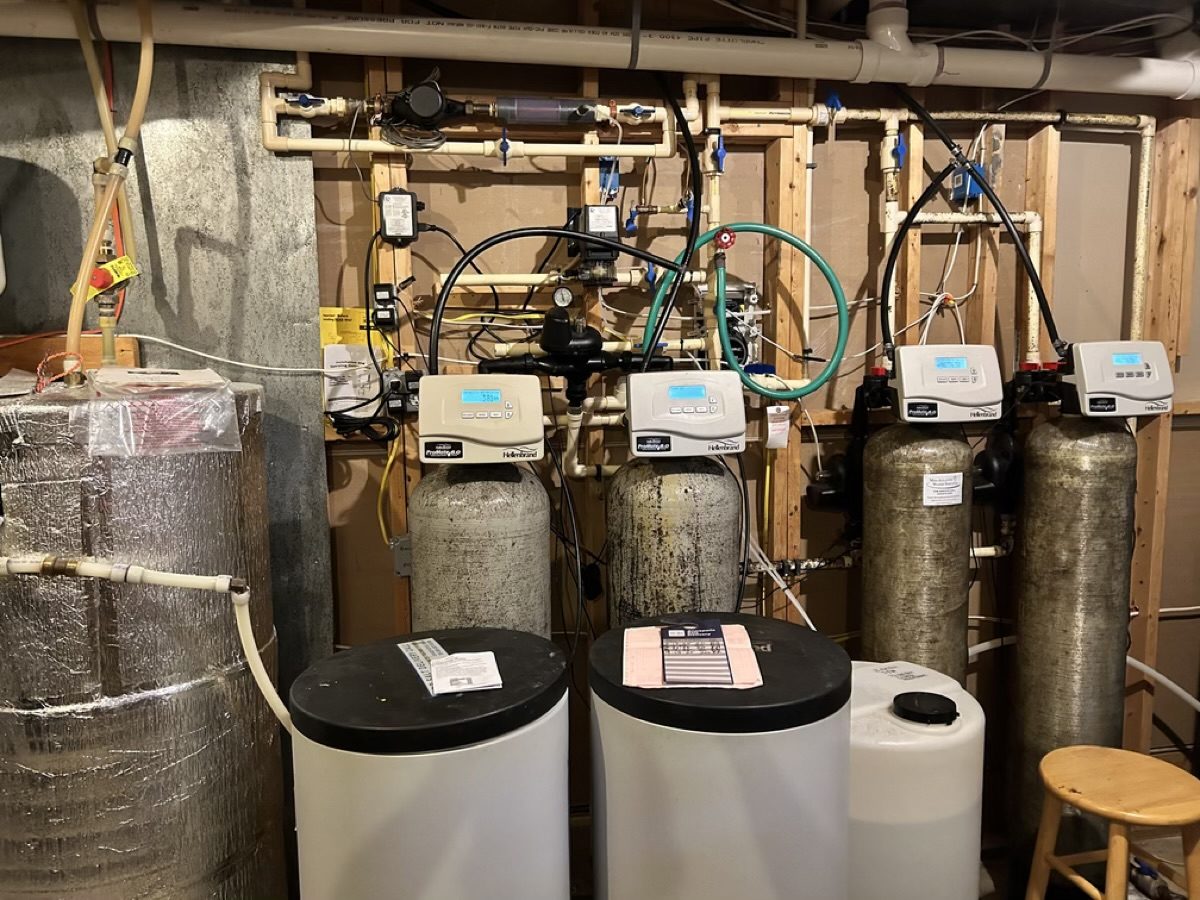
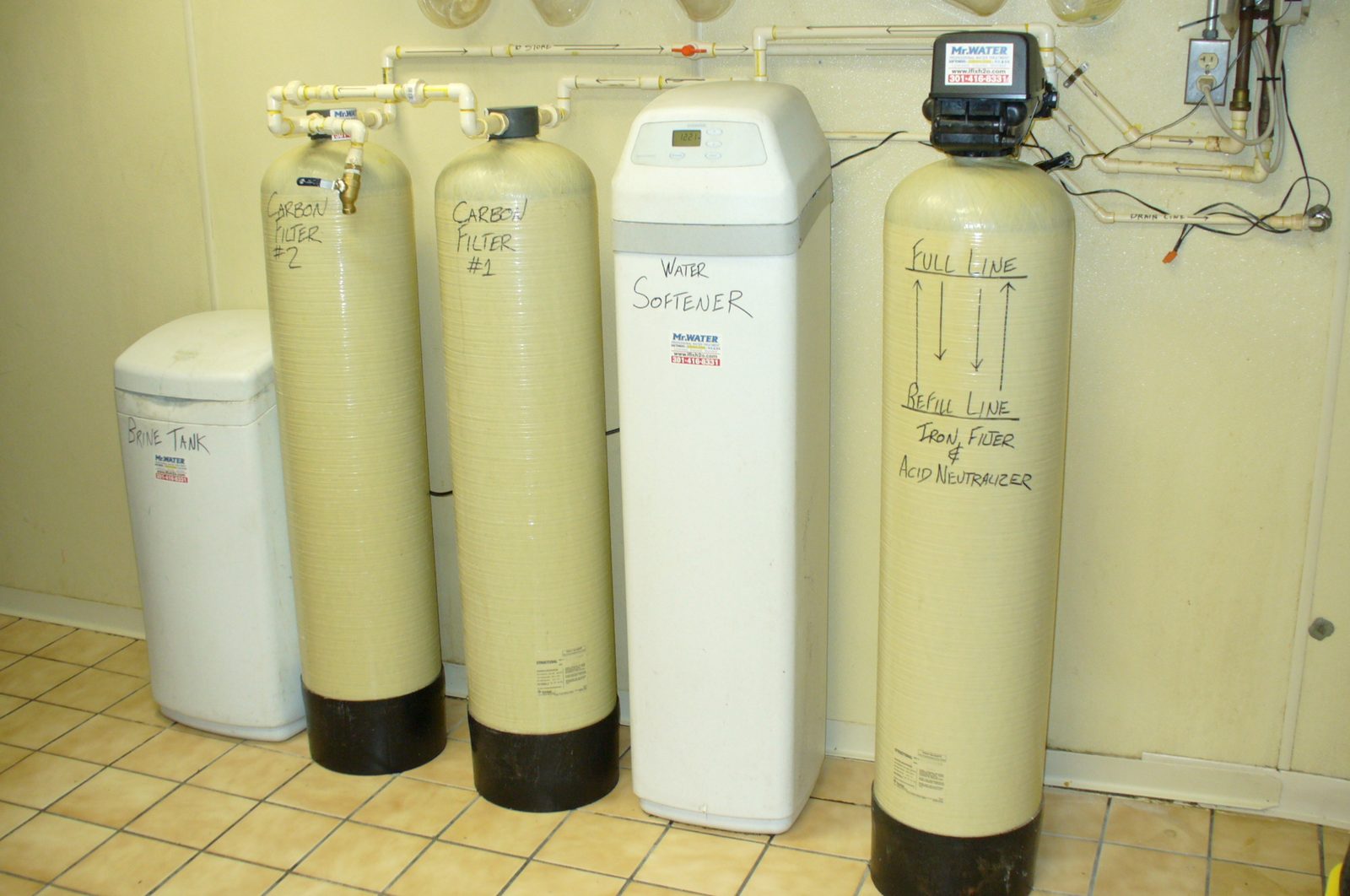
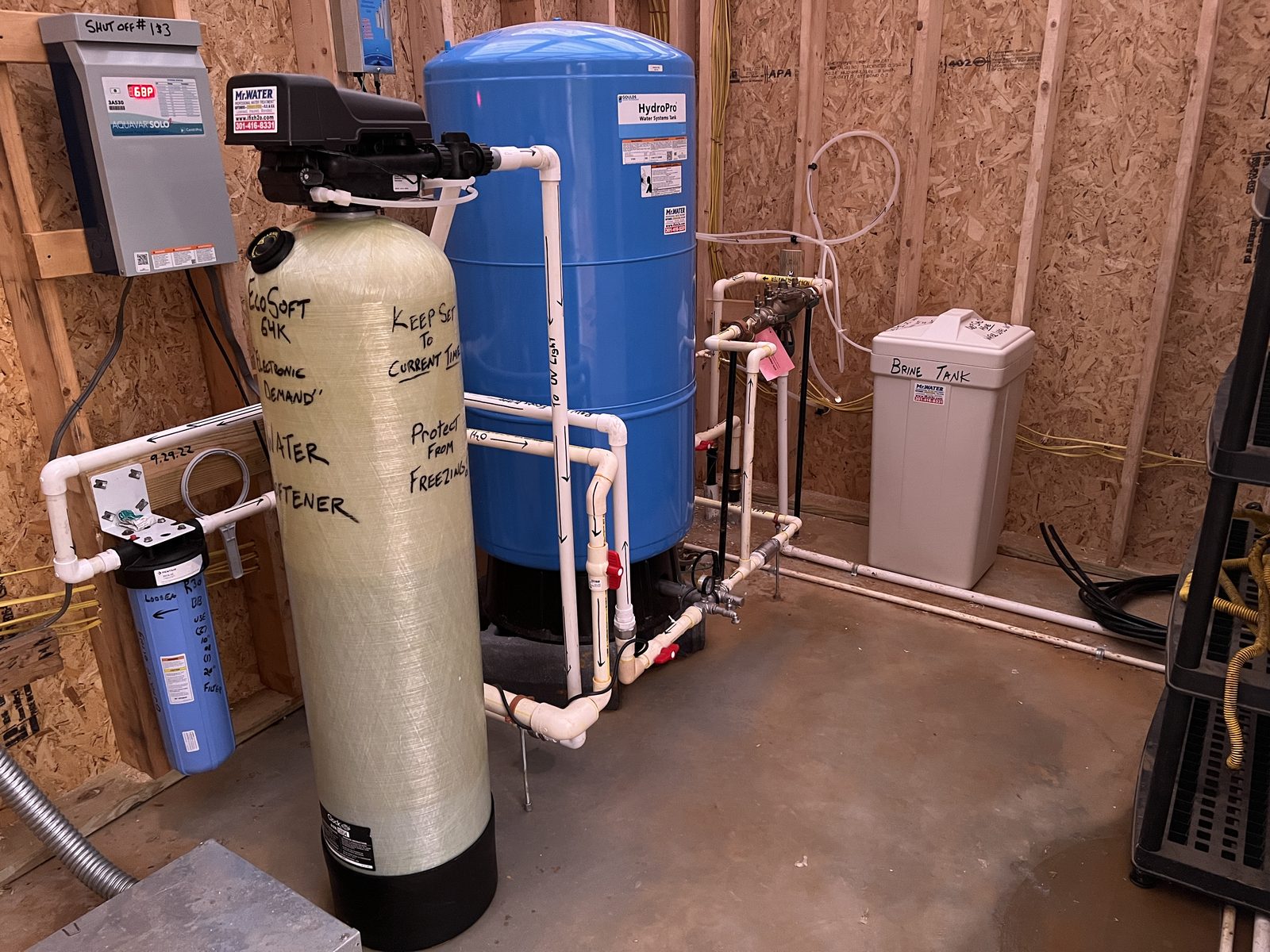
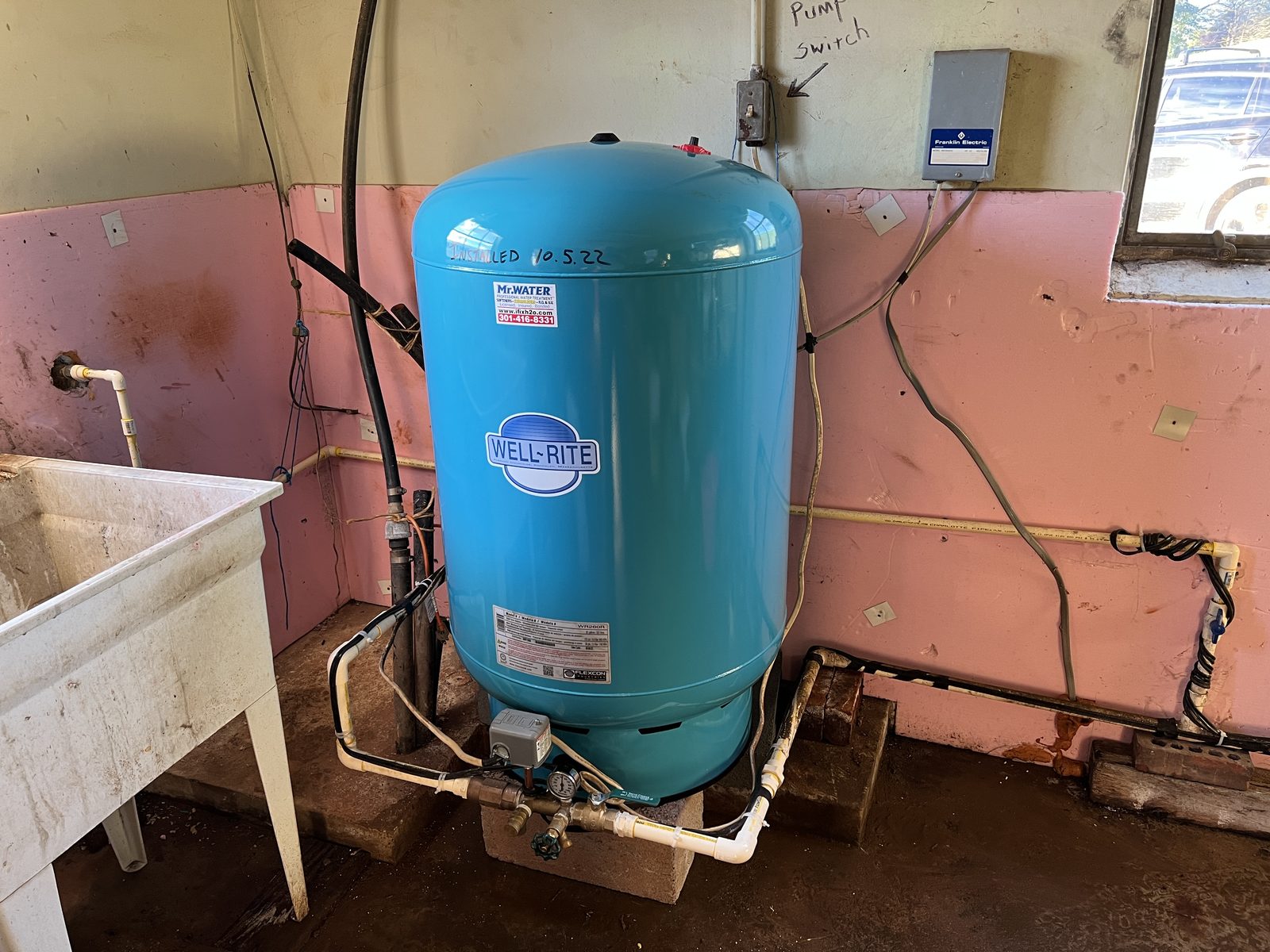
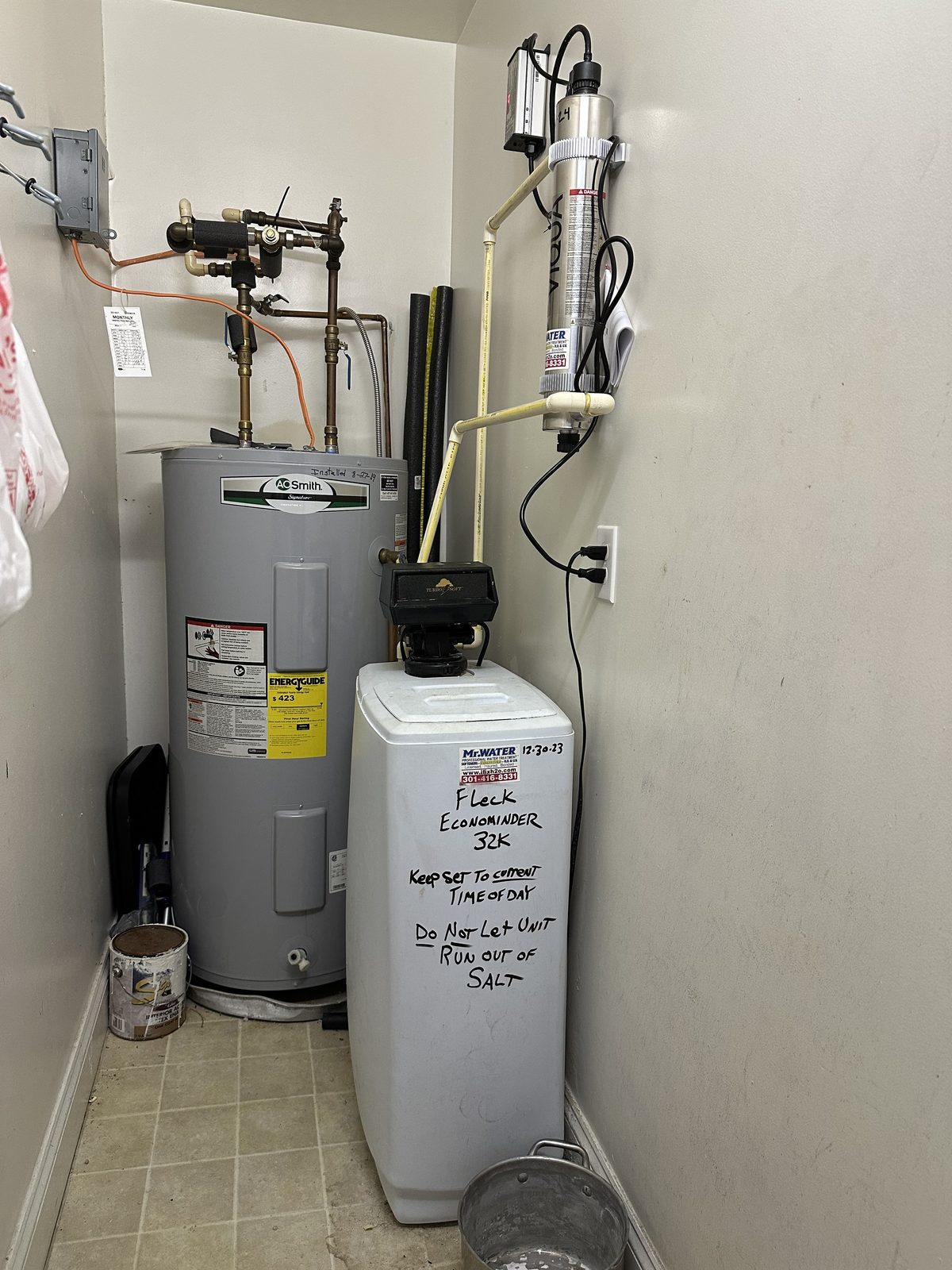
A business uses water differently than a single household: higher daily volume, less tolerance for a system going offline, and hardness or iron problems that show up fast in equipment like dish machines, boilers and laundry systems.
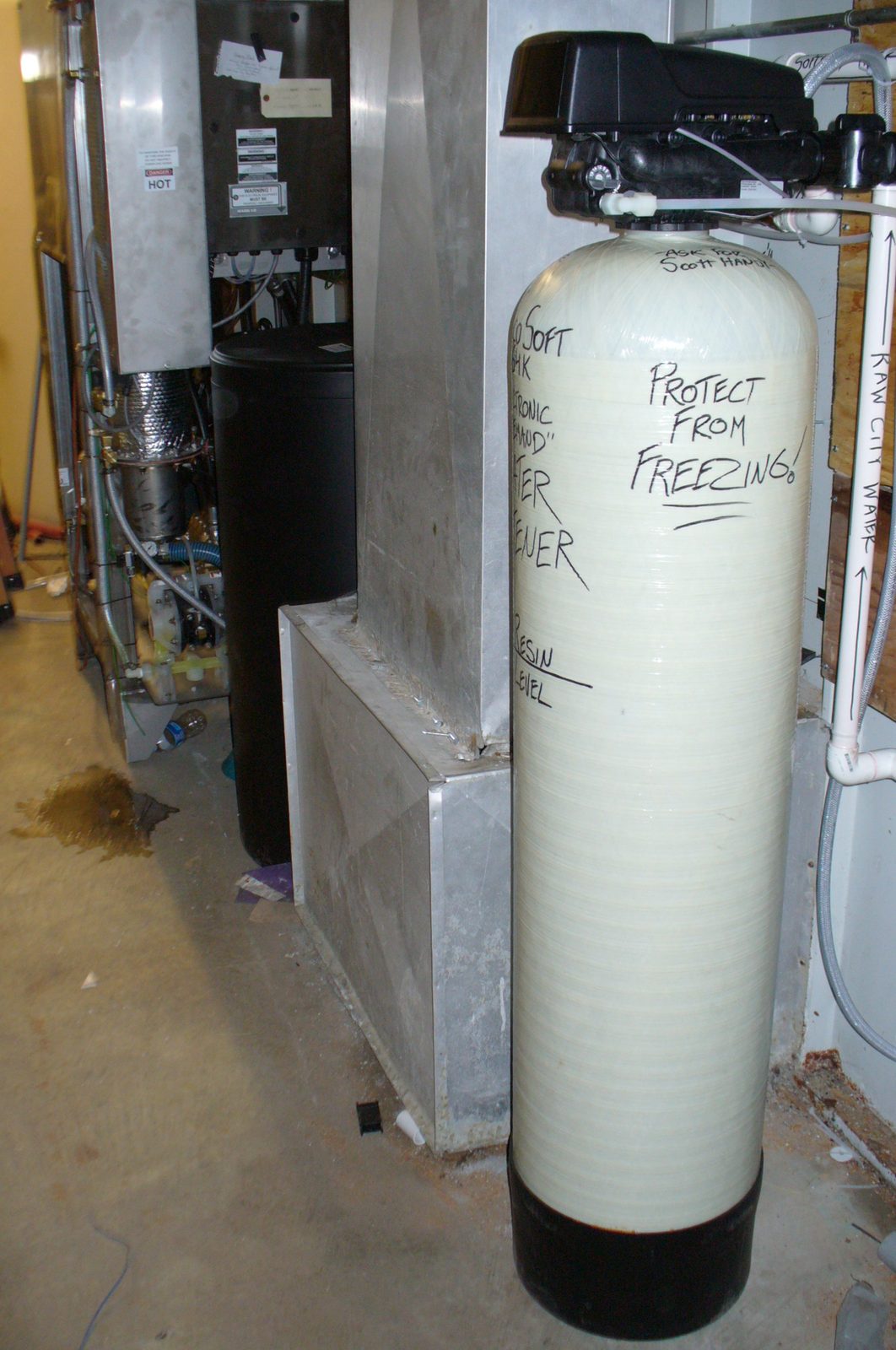
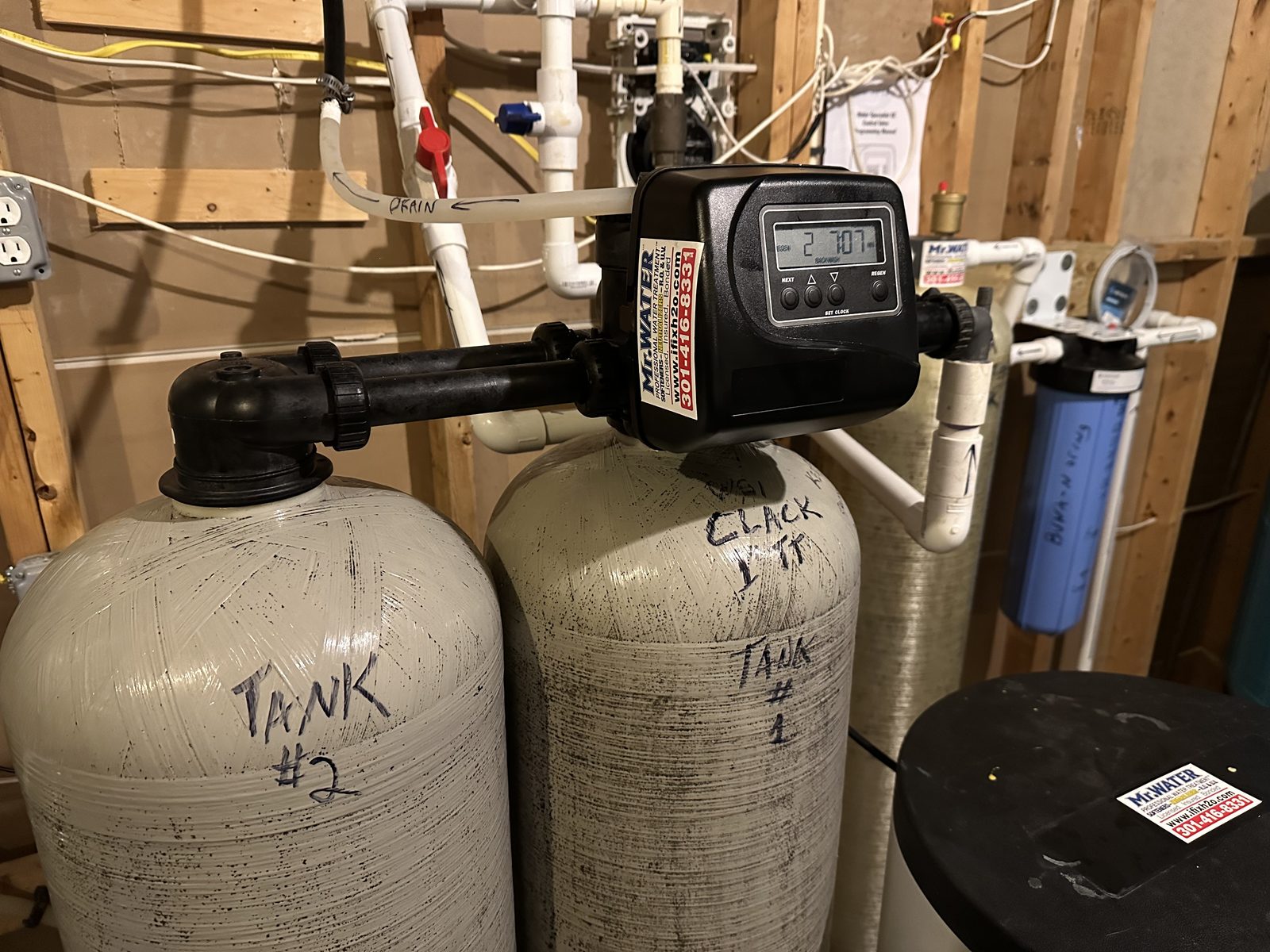
Every system I build is an EcoSoft unit made from commercial-grade components and sized from your actual usage and water test: hardness, pH, iron and sulfur. That can mean a larger-capacity softener, a twin-tank alternating system, and service intervals built around your operating hours. An on-site water analysis runs $85–$110.
A softener's capacity has to match the water's hardness, measured in grains per gallon, and how much water the building uses. An undersized softener regenerates constantly, wastes salt and wears out early. Every softener I install is metered, so it regenerates based on the water actually used and not on a timer.
I do not install "salt-free" or "no-salt" softeners. They do not remove calcium, magnesium or iron from the water. Cation exchange softening is the method I trust to actually soften water for a business.
For iron and sulfur, the Light Industrial 96,000 grain model of my patented system is suitable for light commercial applications.
A very large home has the same heavy water usage as a commercial building. Standard residential water treatment equipment is too small for these homes and is not suitable for the job.
The systems I build for big homes are essentially what you would find in a commercial building, sized from the home's actual water usage and water test.
Most of my work is on equipment someone else installed. The calls I get most: a softener that stopped softening because the resin is fouled with iron or the regeneration cycle is out of calibration, an iron filter that isn't backwashing, an acid neutralizer low on calcite, an RO system no longer producing good water, a UV lamp past its annual change, and a sulfur smell that came back after someone else "fixed" it.
I work on Culligan, EcoWater, Kinetico, RainSoft, Hellenbrand, Hague, Master, Lancaster, Fleck, Autotrol and Clack equipment, no matter who installed it. I keep parts in stock for most home and light commercial control valves, including Autotrol, Fleck and Clack. Control valve rebuilds, resin and media replacement, and tank servicing often keep a system running instead of replacing it outright.
Most repairs are done in one visit with parts I carry on the truck. Repairs carry a 30-day warranty unless your receipt says otherwise.
Often the problem isn't the treatment system at all. It's the well system. A waterlogged pressure tank makes the pump short-cycle, and then the softener or filter never gets the steady flow it needs to backwash. I check the well system first, before replacing any treatment equipment. Low water pressure problems are what I do best: pressure tanks, pressure switches, controls and tank tee settings. I do not replace deep well pumps.
See the repair & service page for the brands I work on and what happens when you call.
All water treatment systems need regular maintenance, especially with the high iron and sediment found in much of Maryland and the Eastern Panhandle of West Virginia. A neglected iron filter or acid neutralizer can let bacteria build up, which causes odors and a big drop in water pressure.
Routine service covers:
Signs a system needs service: water that feels hard again or scale building up on fixtures and equipment, a rotten egg smell coming back, low water pressure, rusty or discolored water, salt not going down in the brine tank, or a system that runs constantly or cycles at odd hours.
I can set service intervals around your operating hours.
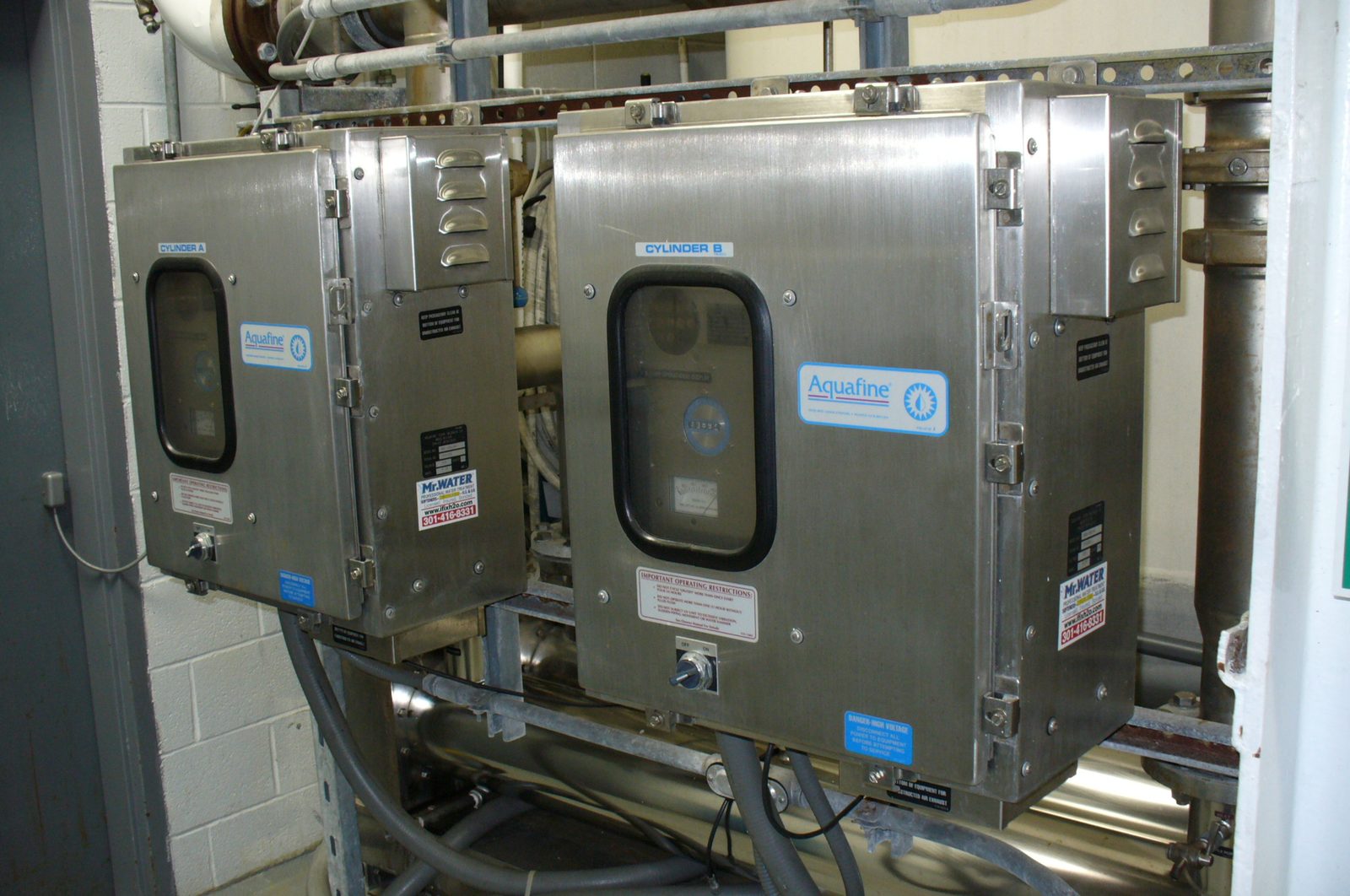
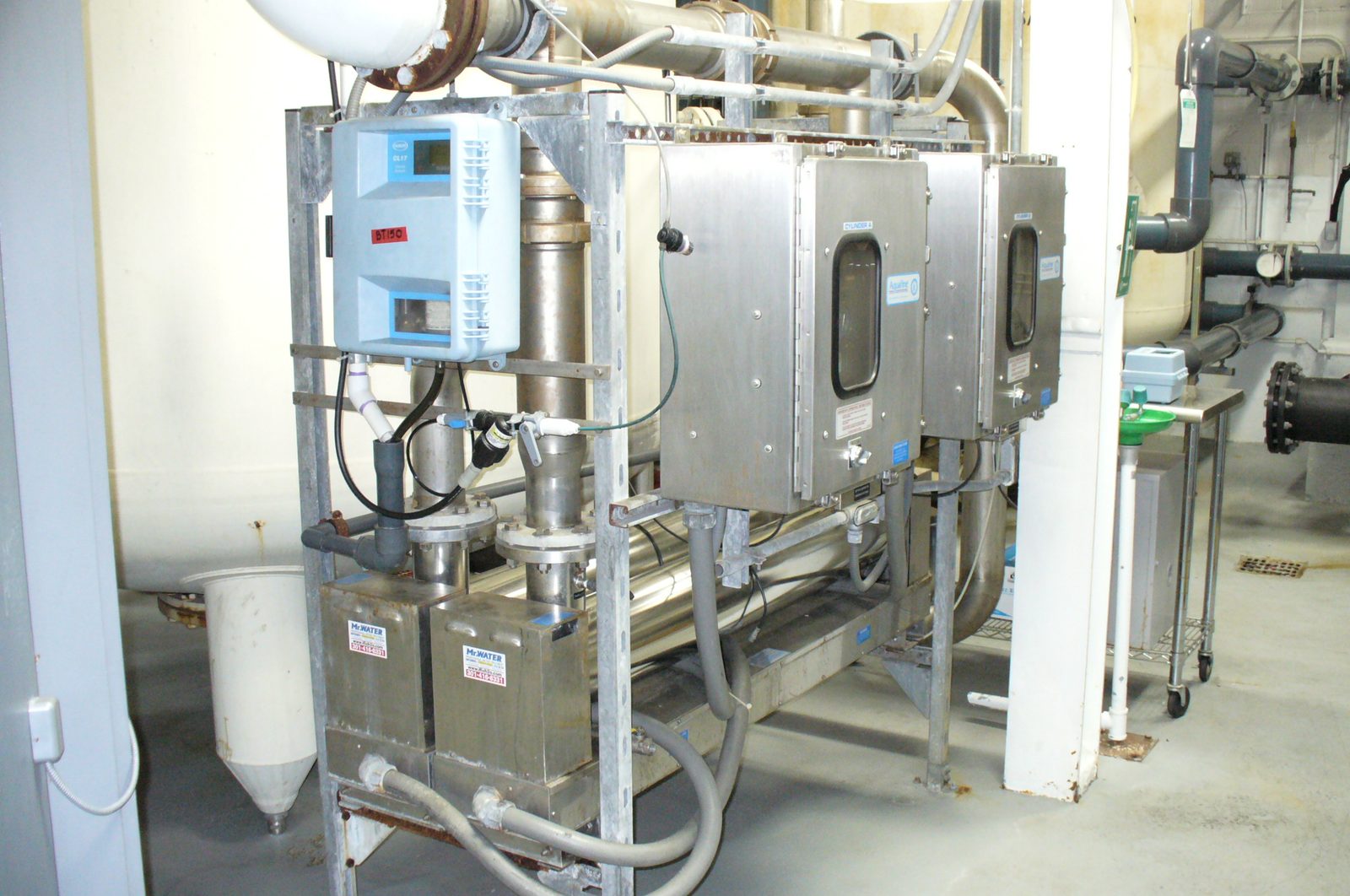
I service industrial UV disinfection systems, including Aquafine units.
If your business is on well water and serves food or beverages, bacteria is the problem that can close the doors: a failed health department water test can shut down a restaurant or bar. Chlorine injection is messy, needs constant monitoring and can leave a disagreeable taste in beverages and ice. UV disinfects without chemicals and without affecting taste. See UV disinfection.
UV only works on clear, pre-treated water, so iron, sulfur, sediment and hardness have to be handled first. UV lamps last about a year and need to be replaced annually.
Use the contact form to send a few photos of the equipment and describe what's going on.
I'll tell you what's wrong and what it costs. You hear from me directly, not a dispatcher.
For the repair itself, an on-site water test, or a system that needs an in-person look, I come to you. I schedule visits Monday through Saturday, 8am to 6pm.
Yes. I service and repair virtually all brands, no matter where the system was bought or who installed it.
In most cases, yes. Most systems can be repaired or rebuilt with new components. The exception is a well pressure tank with a failed bladder, which has to be replaced.
It depends on the water's hardness and how much water the building uses. I test the water first and size the system to the results. A softener that is too small regenerates constantly, wastes salt and wears out early.
No. Salt-free systems do not remove calcium, magnesium or iron from the water, so the hardness is still there. I install cation exchange softeners because that is the method proven to soften water.
I handle well pressure tanks, pressure switches, controls and low water pressure problems. I do not replace deep well pumps.
Yes. From Hagerstown I serve the Eastern West Virginia Panhandle, Northern Virginia and South Central Pennsylvania, along with Central and Western Maryland.
Yes. I've done work for the U.S. National Park Service at facilities served by wells, and I can work for city and county governments with houses and buildings on wells. Mr. Water LLC is licensed, insured and bonded.
From my base in Hagerstown, I serve Central and Western Maryland, the Eastern West Virginia Panhandle, Northern Virginia and South Central Pennsylvania.
In Maryland that includes Washington County (Hagerstown, Williamsport, Boonsboro, Smithsburg), Frederick County (Frederick, Middletown, Thurmont, Jefferson, Walkersville), Carroll County and Montgomery County. In West Virginia it includes Berkeley County and Jefferson County.
Find your town, or see all service areas:
Maryland: Hagerstown · Frederick · Westminster · Gaithersburg · Silver Spring · Annapolis
West Virginia Panhandle: Martinsburg · Hedgesville · Falling Waters · Charles Town · Ranson · Shepherdstown · Harpers Ferry · Berkeley Springs
Send photos and a description through the contact form, and Scott will get back to you directly with a straight answer.
Send Photos & Get a Straight Answer Call (301) 416-8331